Beekeeping Gear Guide 2026: What Works With Your App
A complete 2026 beekeeping gear guide framed by app compatibility. Smokers, hive tools, suits, jackets, veils, hats, gloves, and the smart sensors that integrate directly with HiveSense.
Why this guide is different
Most beekeeping gear guides are affiliate-link factories — the writer earns a commission whether the gear matches your needs or not. We don't run affiliates. The framing here is different: every item is rated by how it integrates with the HiveSense app, not by which retailer paid the highest commission.
Three categories run through the rest of this guide:
- Direct integration. The hardware streams data to HiveSense over BLE. You buy it, pair it, and it shows up in your hive's reading history.
- App-loggable. The hardware is manual, but you track its lifespan, inspection notes, and replacement schedule inside HiveSense.
- 2026 roadmap. Emerging hardware on our integration roadmap that'll work with HiveSense by the end of 2026.
The smoker
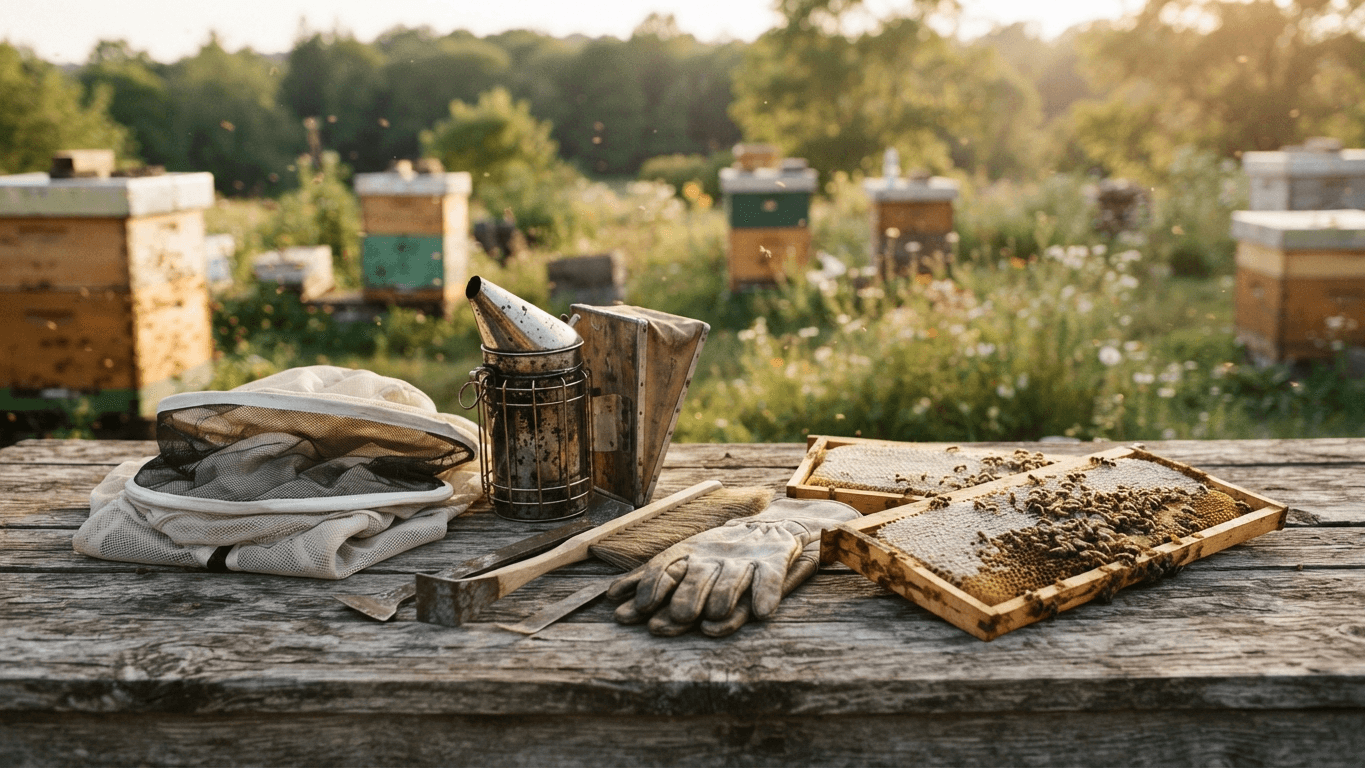
The single most-used tool in beekeeping. Cool smoke calms bees by triggering a feeding response and masking the alarm pheromone (isoamyl acetate) released during inspections.
What to look for in 2026:
- Stainless steel body (galvanised rusts within two seasons)
- Heat shield around the firebox
- 4-inch diameter for hobbyist use; 6-inch for commercial
- Bellows with replaceable spring
What to skip: "smokeless" smokers, heated electric smokers (slow start, battery dependency in the field), and any plastic component near the firebox.
HiveSense status: App-loggable. Track fuel type (pine needles, untreated burlap, cardboard, sumac bobs), purchase date, and replacement bellows.
Hive tool
The J-hook hive tool is the standard. The flat scraper version exists, but the J-hook does both jobs and is the better single purchase.
Recommended weight: 8-10 ounces. Light enough to carry all day, heavy enough to break propolis seals without bending.
Material: stainless steel or carbon steel. Both work. Carbon steel takes a sharper edge but rusts; stainless is maintenance-free.
HiveSense status: App-loggable. Most beekeepers carry two — log which one is at which apiary.
Bee suits and jackets — the hot topic
This is where the 2026 search trends spiked the hardest. "Beekeeping jacket" rose 250% year-over-year, "beekeeping veil" 150%, "beekeeping hat" 190%. New beekeepers are researching protective gear before they buy bees.
Full suit
The right answer for first-year beekeepers. Full coverage from ankle to head, attached veil, multiple zippers and elastic ankles. Cotton or polycotton blend.
Pros: maximum protection, easier to sell on if you quit
Cons: hot in summer, harder to put on quickly
Best for: year-one beekeepers, anyone in agitated colonies, photographers and visitors
Ventilated jacket
Half a suit. Mesh body, cotton sleeves, attached veil. Loses 80% of the protection in exchange for 80% better airflow.
Pros: dramatically cooler in hot weather, faster to put on
Cons: legs and ankles unprotected, occasional sting through the mesh
Best for: year-2+ beekeepers in hot climates, quick check visits, gardeners who keep one or two hives
Veil only (with hat)
Head and neck protection only. Most beekeepers buy one for visitors and emergency use.
Log Your Gear in HiveSense
Lifespan tracking, inventory, and BLE sensor pairing in one app.
Pros: cheapest, most ventilated
Cons: torso and arms fully exposed
Best for: experienced beekeepers, demonstration hives, summer photo ops
What we recommend
A first-year beekeeper should buy a full suit. Period. Switch to a ventilated jacket in year two if the climate justifies it. Keep one cheap veil-and-hat for visitors.
HiveSense status: All app-loggable. Suit lifespan typically 3-5 years; track sting-through events to know when to replace.
Gloves
Cheap latex disposables, leather, goatskin, or nitrile. Each has a use.
- Goatskin: the standard. Tactile feel, decent protection. Replace every 1-2 seasons.
- Cowhide: thicker, less tactile. Good for swarm extractions and aggressive colonies.
- Nitrile (disposable): for quick inspections, post-sting, and AFB-suspect colonies you don't want to cross-contaminate.
- Bare hands: for experienced beekeepers in calm colonies. Don't recommend for first-year.
HiveSense status: App-loggable as inventory. We're working with several suppliers on RFID-tagged glove tracking — that's on the 2026 roadmap.
Smart hive sensors — the direct integrations
This is where HiveSense earns its name. The following sensors stream data into the app via BLE without any extra setup beyond pairing.
BroodMinder W (weight)
The most important sensor for any hobbyist. Logs hive weight every hour. You see nectar flow start, swarm events, and overwinter consumption without opening the hive.
- Battery life: 2-3 years
- Range: 10m to your phone, longer to a hub
- Direct HiveSense integration: yes, since 2024
BroodMinder T2 / TH (temperature & humidity)
Logs internal temperature and humidity at brood depth. Essential for queenlessness detection (brood-temp drift below 34°C is an early signal).
- Battery life: 18 months
- Direct HiveSense integration: yes
BEEP base station
Open-source IoT hive monitor. More involved setup than BroodMinder but free for the firmware and software.
- Direct HiveSense integration: yes, via BLE
- Best for: tinkerers, makers, citizen-science apiaries
What's on the 2026 roadmap
These are real products being built in 2026 that we've prototyped against:
Acoustic entrance counters
Microphone arrays that count bee in/out flights and detect pre-swarm piping signatures (queen vocalisations at ~250 Hz). The HiveSense AI roadmap includes acoustic anomaly detection for late 2026.
Computer-vision frame readers
Smartphone-based frame analysis. You photograph a frame; the model identifies the queen, counts Varroa on adult bees, grades brood pattern, and flags disease symptoms. Several teams are racing to ship these by mid-2026.
NFC-tagged jackets and tools
Inventory-grade tracking for commercial operations. Tap your jacket against your phone, it logs as the gear used during today's inspection. Not yet shipped — expect early 2027.
A note on what we don't recommend
- The Flow Hive. $700 for a honey-tap hive that doesn't replace inspections, can leak, and uses plastic frames the bees barely accept. The marketing is great. The economics are not.
- Cheap eBay nuc boxes. Splinters, gaps, untreated wood. Buy from a reputable supplier or build your own.
- "Premium" hand-painted hives. Pretty, but indistinguishable in performance from a $30 unpainted box you painted yourself.
- Smoker fuel canisters. Pine needles and untreated burlap are free. Don't buy fuel.
How to log all of this in HiveSense
The app's Inventory feature lets you track every piece of gear by:
- Purchase date and price
- Apiary or hive assignment
- Lifespan / replacement reminder
- Photo of receipt or wear-and-tear
- Voice notes per item
For directly-integrated sensors (BroodMinder, BEEP), pairing is one tap. The data starts streaming and shows up in the hive's reading timeline alongside your inspection notes.
For more on the smart hive monitoring philosophy, the hive management workflow, or the offline-first design that lets all of this work in the field with no signal, follow those links.
If you are still putting together your first kit, the beekeeping starter kit guide walks through real SKUs, 2026 prices, and what to skip in year one.
The right gear is the gear you'll actually use. Buy the basics, add the smart layer when you're ready, and let the app do the remembering.
Log Your Gear in HiveSense
Lifespan tracking, inventory, and BLE sensor pairing in one app.
Free to start. Works offline. No credit card required.
More from the blog
View allHow to Harvest Honey: First Year Step-by-Step (2026 Guide)
A complete step-by-step guide to harvesting honey for the first time. When to harvest, equipment options, the day-of process, bottling, labelling, and how much to leave for the bees.
ELAP for Beekeepers: The Records a Colony-Loss Claim Needs
What ELAP actually covers for honeybee losses, the documentation FSA asks for, and the records to keep now so a claim is possible later.