How to Catch a Swarm: A Practical Guide
How to catch a honey bee swarm safely — gear, the actual capture, hiving the swarm, and what to do in the first 72 hours so the colony stays put.
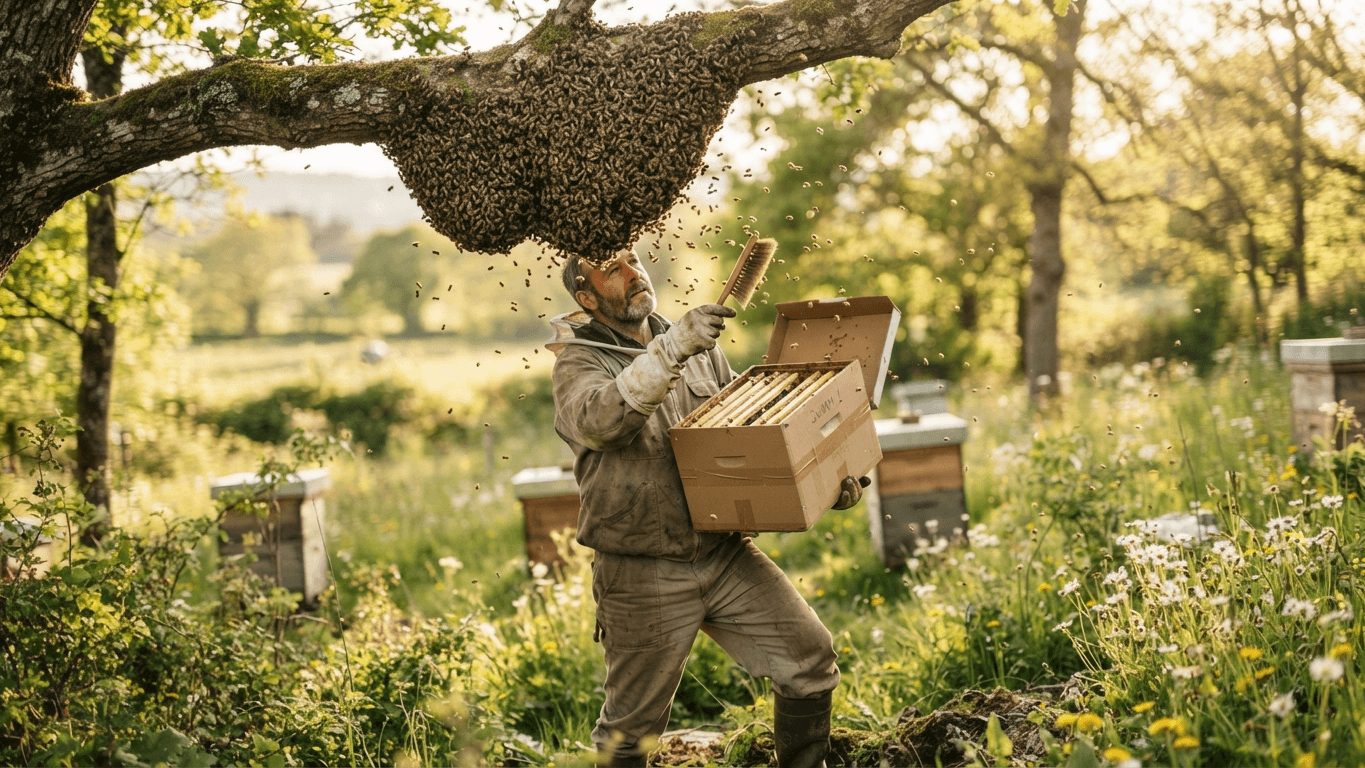
A Free Colony Is Hanging Off a Branch — Now What
A honey bee swarm is a queen and roughly half her workers leaving the parent colony to start a new home. They are not aggressive. They have no brood, no honey stores, and nothing to defend, so they cluster, send out scouts, and wait. That cluster is the easiest, calmest, free-est colony you will ever acquire — if you can get to it before the scouts find a permanent home and lead the swarm away, usually within 24–72 hours.
This is a practical guide to catching one. Gear, the actual capture, hiving the bees, and the first three days that decide whether they stay or abscond.
Why Swarm Catching Matters in Late April–June
Swarm season in temperate climates runs from late April through June. A swarm caught in May has roughly four months of forage and brood-rearing time ahead of it — enough to draw a full deep, build to overwintering strength, and become a productive year-two hive. A swarm caught in August is a different beast: probably under-populated, probably superseding, and unlikely to overwinter without intervention.
If you are reading this because you got the call from a neighbor with a basketball-sized cluster on their hydrangea: good. Get moving. Swarms move fast.
What You Need
A swarm catch kit fits in a milk crate. The non-negotiables:
| Item | Why |
|---|---|
| Veil + gloves | Swarms are calm but you will press against the cluster |
| Cardboard nuc or 5-frame nuc box | The bigger the swarm, the more capacity you need |
| One frame of drawn comb (or foundation) | A comb to cluster on dramatically reduces absconding |
| Flat sheet | Catches stragglers and lets you bundle the swarm |
| Pruners or loppers | For when the cluster is on a branch you can cut |
| 1:1 sugar water spray bottle | Wets wings, calms the cluster, and slows flight |
| Soft brush | For scooping bees off walls or fences |
| Ladder | Most swarms cluster 6–15 feet up |
What you do not need: a smoker (a swarm has no honey to gorge on), bee escape boards, or a chainsaw. If the swarm is in a wall cavity or chimney, that is a cut-out, not a swarm catch — different job, different post.
Confirming It Is Actually a Swarm
People call beekeepers about wasps, yellowjackets, hornets, and even bumble bee nests. Before you drive across town, ask the caller to send a photo. Honey bee swarm signals:
- A tight cluster the size of a softball to a basketball, hanging from a single point
- Golden brown, fuzzy bees (not yellow-and-black striped, smooth, or shiny)
- The cluster has been there less than 72 hours
- The bees are calm — flying around but not actively defending
If the photo shows a papery nest, an in-ground hole, or aggressive aerial defense, redirect the caller to a pest control company. Catching wasps with a beekeeping setup is dangerous and pointless.
The Capture, Step by Step
1. Read the situation
Before doing anything, walk around the cluster. How high is it? Is the branch you would cut load-bearing for the rest of the tree? Are there power lines, kids, dogs, or property you would damage if a chunk of bees fell sideways? A swarm catch that ends with a homeowner's azalea destroyed is not a free colony, it is a debt.
2. Position the box directly below
A shaken or cut swarm falls straight down. Lay a flat sheet under the cluster, set the open nuc box on the sheet, and position it so the cluster hangs directly above the box. If the cluster is on a high branch, get a ladder and put the box on a rung or in a bucket strapped to the ladder.
Log Your New Swarm Colony in HiveSense
Track capture date, source, queen status, and the critical first 30 days — offline.
3. Shake or cut
If the branch is small enough to grip and dispensable enough to remove: snip it just above the cluster, hold it over the box, and give one sharp downward shake. Most of the swarm — including, hopefully, the queen — falls into the box as a single dense mass. The bees that miss will start to march toward the queen as soon as she starts releasing pheromone.
If the cluster is on something you can't cut (a wall, a fence post, the side of a parked car), use a brush or a cupped gloved hand to scoop them gently into the box. Slower, but it works.
4. The fanning test
Set the lid on the box at a slight angle so there is a gap of about 1 inch. Within 5–15 minutes, watch the entrance carefully. If you got the queen, you will see workers standing at the gap with their abdomens raised and their wings beating — fanning Nasonov pheromone to call the rest of the swarm in. The flying bees will start streaming toward the box.
If you instead the bees re-cluster on the original branch within 20 minutes, the queen is still up there. Repeat the shake. If you need help finding someone to take the bees, check our swarm removal directory.
5. Wait until dusk to move
Once the fanning starts and the bulk of the swarm is inside, leave the box in place until sunset. This is the single most-skipped step and the reason a lot of swarm catches "lose half the bees on the way home." Foragers that left before you arrived will keep returning to the original cluster site. Give them an hour to come home.
At dusk, close the lid (leave a small ventilation gap), strap the box, and transport.
Hiving the Swarm
Get them into a permanent box the same evening or first thing the next morning. A swarm waiting in a sealed cardboard nuc in 80°F heat will start to overheat and bearding bees will leak out the gaps.
Setup:
- Single deep box, ideally with one frame of drawn comb (a comb of brood from another hive is the absolute best — they will rarely abscond from brood).
- Reduce the entrance to a 1–2 inch gap. Newly hived swarms are prime robbing targets.
- Add a 1:1 sugar syrup feeder. They have no stores and need to draw comb fast.
- Place the hive on a flat stand, sheltered from afternoon sun if possible.
The dump:
Open the box, lift any frames you've added, hold the swarm container above the open hive, and shake. The bees fall in as a mass. The ones that fly out will quickly orient on the queen pheromone coming from the new hive and re-enter on their own. Within 30 minutes the entrance should be busy with fanning workers.
Close up and leave them alone for 5–7 days. The single biggest cause of absconding (the colony leaving the new hive after you've installed them) is opening the lid in the first 48 hours.
The First 72 Hours Decide Everything
Three things go wrong in the first three days, in this order:
- Absconding. The swarm decides your box is not home and leaves en masse. The fix is the frame of drawn comb (or brood) inside, plus leaving the lid alone.
- Robbing. A weak new colony with sugar syrup and no defenders gets robbed by stronger nearby hives. The fix is the entrance reducer.
- Queen failure. Sometimes a swarm queen is older, mated poorly, or gets killed in the shake. You will not know for 7–10 days. Mark your calendar.
After day 7 (not before): pop the lid, look for eggs and young larvae. Eggs = the queen is laying = you have a colony. No eggs = you may have a queenless swarm; refer to our guide on signs of a queenless hive and act inside the next week.
Where Swarms Come From — and How to Get on the List
Most caught swarms come from one of three sources:
- Your own apiary. If you are losing swarms, you have a swarm prevention problem more than a catching problem. Check the bottom bars of brood frames every 7–10 days in spring for swarm cells.
- A neighbor's call. Get on your local beekeeping club's swarm list. In most clubs, calls go to whoever is nearest and available. Late April through June, expect 2–8 calls per season.
- Bait hives. A 5-frame nuc box with old brood comb and a few drops of lemongrass oil, placed 8+ feet up in a tree at the edge of your property, will catch swarms passively. The standard bait setup catches roughly one swarm per box per season in temperate climates with active bee populations.
Mark the Bees Before You Forget Where They Came From
Catching a swarm is exciting. Three weeks later, you will not remember whether the queen was unmarked, what color the cluster was, or whether the swarm came from the maple tree on Elm Street or the church bell tower. By August, this matters: swarms with unknown queen lineage have to be evaluated on their own merit, and you need a record of what they came from to do that.
The minimum log per caught swarm:
- Date and time of capture
- Source (homeowner address, your own hive, bait box)
- Estimated size (softball, basketball, beach ball)
- Queen seen? Marked? Color?
- Hive assignment in your apiary
A few photos help, especially of the cluster in its original location. Three months later when you are deciding whether to overwinter or combine the colony, the original size of the swarm is a useful data point.
The HiveSense Angle
Swarm captures are messy events. You are usually somewhere unfamiliar, often on a ladder, almost always running on adrenaline. The records that matter — capture date, source, estimated size, queen status — get logged in a notebook that gets lost, or a phone notes app you forget the name of, or a text to yourself that scrolls into the void.
In HiveSense, you can create a new hive directly from the field and set its source to Swarm, dictate the capture details into a voice note right there at the truck, and snap a photo of the cluster. Everything works offline, so a no-signal rural pickup is the same as one in your driveway. Use our swarm trap playbook for more tips on catching swarms. The colony's first inspection in the new box, the first sighting of eggs, the first super added — all stamped to the swarm record so by August you know exactly what you have. See the full offline beekeeping app for how the field-first design works.
A caught swarm in May is a year-two colony in waiting. Don't lose track of it.
Log Your New Swarm Colony in HiveSense
Track capture date, source, queen status, and the critical first 30 days — offline.
Free to start. Works offline. No credit card required.
More from the blog
View allBeekeeping Startup Cost 2026: What One Hive Really Costs
What it costs to start beekeeping in 2026, line by line: hive, bees, gear, tools, feeding and mite control, priced from real US suppliers for one hive and two.
How to Find the Queen Bee in a Hive (Without a Teardown)
Where the queen actually sits in the nest, what separates her from a worker at a glance, the six-step search that works, and what to do when you cannot find her.