How to Start Beekeeping: A First-Year Roadmap
A practical first-year roadmap for starting beekeeping — what to buy, when to order bees, what your first season actually looks like, and the costs and mistakes to plan around.
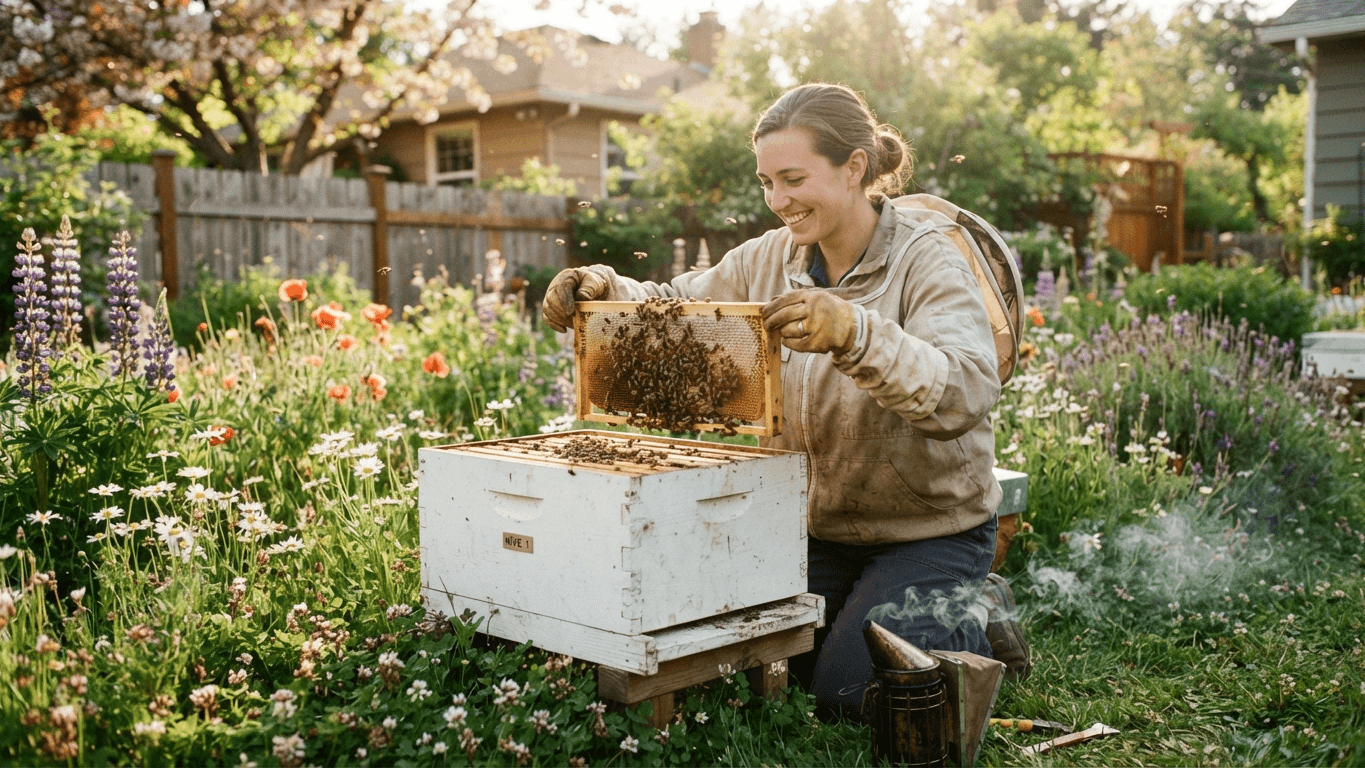
The Short Answer
To start beekeeping, do four things in order: learn for a season, order bees and equipment in winter, install your first colony in spring, and plan to leave the honey to the bees in year one. Most beginners start with two hives (not one — two lets you compare and share resources), spend roughly $600–1,000 to get going, and shouldn't expect a honey harvest until year two.
This post is the practical roadmap — what to buy, when, and what the first season actually looks like. If you want the deeper education path (clubs, mentors, books, courses), read how to learn beekeeping alongside this — the two go together: this one is the action plan, that one is the study plan. For finding and making the most of a mentor specifically, see how to find a beekeeping mentor.
Step 1: Learn Before You Buy (Fall–Winter)
The single best predictor of a successful first year is having a local mentor and a club, because beekeeping is intensely regional — what works in Georgia fails in Minnesota. Spend the fall and winter before your first bees joining a local beekeeping association, reading one solid beginner book, and ideally taking a winter short-course. You're not wasting time; you're avoiding the expensive mistakes.
Step 2: Choose Your Equipment (Winter)
Don't overthink the gear. A standard starter setup is a Langstroth hive (the boxes-and-frames design most clubs and mentors know), basic protective equipment, and a few tools. Here's the realistic first-year shopping list and budget:
| Item | Typical cost (USD) | Notes |
|---|---|---|
| Langstroth hive (per hive) | $150–250 | Bottom board, two boxes, frames, inner + outer cover |
| Bees (package or nuc, per colony) | $130–200 | Nuc preferred for beginners — established and laying |
| Suit or jacket + veil | $80–150 | Don't cheap out on the veil |
| Gloves | $15–30 | Goatskin is the common choice |
| Smoker | $30–50 | Get a bigger one; small ones go out |
| Hive tool | $10–20 | Buy two — you will lose one |
| Total for two hives | ~$700–1,100 | The two-hive recommendation roughly doubles the hive + bees lines |
For the full breakdown of what's worth the money and what isn't, see our beekeeping gear guide.
Keep Your First-Year Records in One Place
A free, offline logbook for inspections, treatments, and your first harvest — free for up to 15 hives.
Step 3: Order Bees Early (Winter)
This trips up nearly every beginner: bees sell out. Package and nuc suppliers take orders in winter for spring pickup, and the good local nuc producers fill up by January or February. Order in December–February for an April–May install. Choose a nuc (nucleus colony — five frames of established bees, brood, and a laying queen) over a package if you can; it's more forgiving for a first-timer.
Step 4: Install in Spring
When your bees arrive in spring, you install them, feed them sugar syrup to help draw comb, and then mostly leave them alone while they build up. Your job in the first two months is light: confirm the queen is laying, make sure they have food and space, and resist the urge to open the hive every day. For exactly what to look for the first time you open up, follow the first spring hive inspection walkthrough.
Step 5: Manage Through Summer and Into Winter
The first-season rhythm after install:
- Late spring: inspect every 1–2 weeks; confirm laying queen; add space before they get crowded.
- Summer: monitor for swarming and watch the population build. Start tracking Varroa mites — they're the leading cause of colony death.
- Late summer/fall: the most important task of year one — get Varroa under control and make sure the colony has enough stored honey to overwinter. Follow an integrated Varroa treatment plan; a hive with high mite loads in fall usually doesn't survive to spring.
- Winter: leave them closed, reduce the entrance, and let them cluster. Resist opening the hive.
What to Realistically Expect in Year One
Set expectations now to avoid disappointment:
- Honey: little to none. A first-year colony spends the season building comb and population. Plan to leave everything they make for them to overwinter on — roughly 40–60 lb in mild climates, 60–90 lb up north (see do beehives die in winter). A real harvest comes in year two.
- Losses: roughly 1 in 3 first-year colonies don't survive winter — usually to Varroa. Starting with two hives is partly insurance against this.
- Time: a few hours a month in season, more during spring buildup. It's a hobby, not a second job — but it's a seasonal one with real deadlines (ordering bees, fall mite treatment).
How to Start Beekeeping, Step by Step
- Join a local club and find a mentor the fall before your first bees.
- Buy a Langstroth starter setup for two hives over winter.
- Order nucs in December–February for spring pickup — they sell out.
- Install in spring, feed syrup, and confirm the queen is laying.
- Treat for Varroa in late summer and ensure adequate winter stores.
- Leave the hive closed through winter and plan your first real harvest for year two.
The Bottom Line
Starting beekeeping is less about buying the perfect gear and more about timing and a local mentor. Learn over winter, order bees early, start with two hives, keep Varroa in check, and treat year one as the colony's foundation season rather than a honey crop. Do that and you'll head into year two with drawn comb, surviving colonies, and a real shot at a harvest. A hive management app makes the record-keeping habit stick from day one — free for up to 15 hives and works fully offline at the apiary.
Keep Your First-Year Records in One Place
A free, offline logbook for inspections, treatments, and your first harvest — free for up to 15 hives.
Free for up to 15 hives. No credit card required.
More from the blog
View allHow to Find the Queen Bee in a Hive (Without a Teardown)
Where the queen actually sits in the nest, what separates her from a worker at a glance, the six-step search that works, and what to do when you cannot find her.
How to Find a Beekeeping Mentor (and What to Do Next)
Finding a beekeeping mentor is the fastest way to learn — but most guides stop at "join a club." Here's where to actually look, what to ask, and how to get the most out of every hive visit once you've found one.