Do Beehives Die in Winter? Why Colonies Are Lost
Do beehives die in winter? Yes — but rarely from the cold itself. Here is why winter colony losses really happen (Varroa, starvation, moisture) and how to prevent them.
The Short Answer
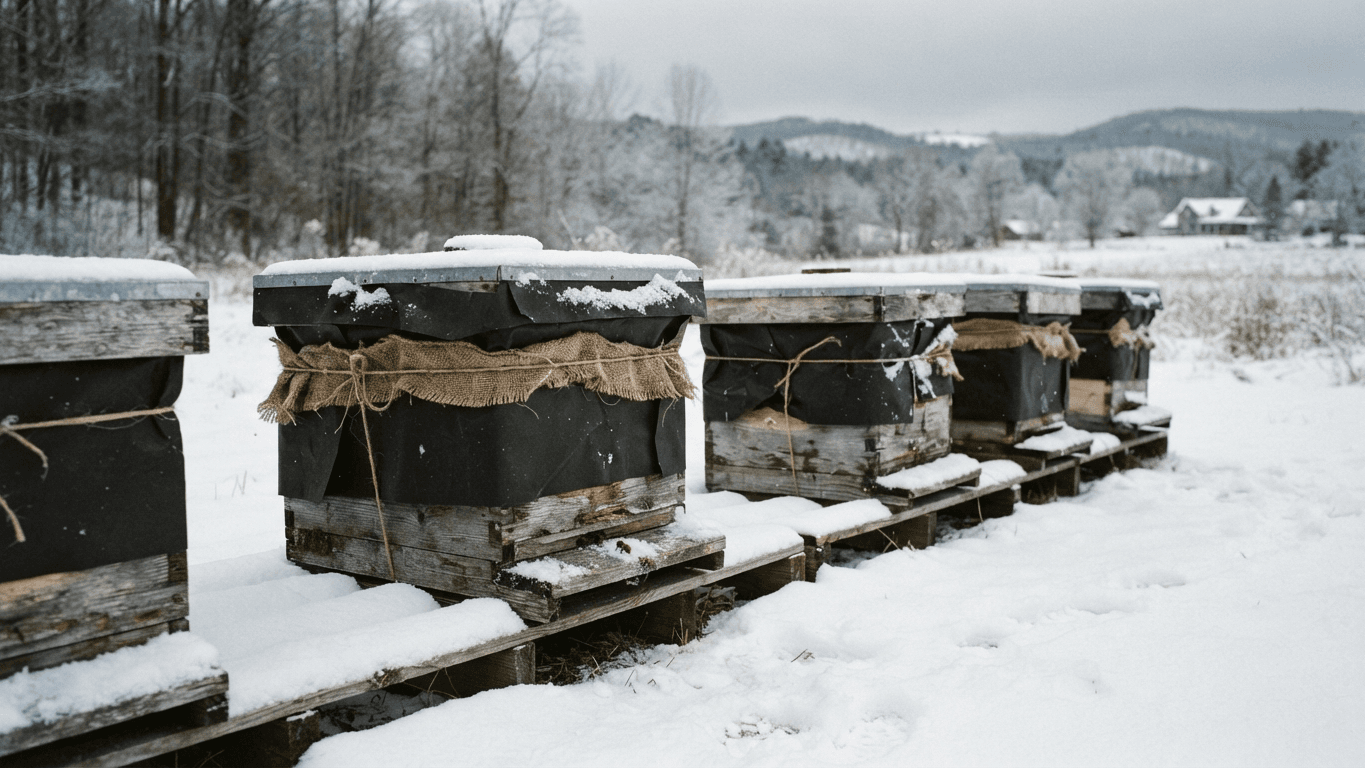
Yes — beehives do die in winter, and it's common: depending on the year and region, 20% to 40% of colonies are lost over winter. But here's the part that surprises beginners: healthy colonies almost never die from the cold itself. Honey bees survive winter just fine by clustering and shivering to stay warm. They die from three things that the cold merely exposes: Varroa mites, starvation, and moisture. Get those three right and most colonies overwinter successfully.
Why Colonies Actually Die in Winter
| Cause | What happens | When it's set |
|---|---|---|
| Varroa mites | Mites weaken bees and spread viruses; the winter cluster is too small or sick to survive | Lost in late summer/fall, not winter |
| Starvation | The cluster runs out of honey, or can't move to reach it in extreme cold | Set by fall stores + placement |
| Moisture | Condensation drips cold water onto the cluster; damp kills faster than cold | Set by hive ventilation |
| Cold (alone) | Rarely fatal to a strong, healthy, well-fed colony | Almost never the real cause |
The critical insight: most winter death is decided in the fall, not the winter. By the time a colony dies in January, the mistake was usually made in September.
Cause 1: Varroa (The Real Killer)
Varroa mites are the leading cause of winter colony loss, full stop. Mites feed on bees and transmit viruses that shorten the lives of the very "winter bees" that need to live for months to carry the colony to spring. A colony with high mite loads in fall raises sick winter bees and dwindles to nothing by midwinter — even with plenty of honey.
Track Winter Stores and Mite Loads
Log fall weights, treatments, and winter cluster checks so you see trouble before it is fatal.
The fix is timing: monitor mites through the season and treat in late summer/early fall, before the winter bees are raised. This is the single highest-impact thing you can do for winter survival. Follow an integrated Varroa treatment plan and don't skip the fall efficacy check.
Cause 2: Starvation
A colony needs enough stored honey to feed itself through months with no forage — roughly 60–90 lb (27–40 kg) in cold climates, less in mild ones. Starvation happens two ways: the colony simply didn't have enough going into winter, or it had enough but couldn't reach it (in extreme cold the cluster won't break to cross an empty gap of comb to honey on the far side).
Prevent it by checking fall weight (a hive scale makes this trivial) and leaving adequate stores — don't over-harvest in year one or in a poor flow year. On warm winter days you can heft the hive or add emergency fondant if it's light.
Cause 3: Moisture
Counterintuitively, damp kills colonies faster than cold. A clustering colony produces warmth and water vapor; if that vapor hits a cold inner cover and condenses, it rains cold water back down onto the bees. Wet bees can't stay warm. The fix is ventilation: a small upper entrance or a moisture board lets humid air escape, and tilting the hive slightly forward keeps condensation from pooling over the cluster.
How to Prevent Winter Colony Loss
A fall checklist that covers the real causes:
- Treat for Varroa in late summer — before winter bees are raised. This matters more than everything else combined.
- Confirm adequate stores — heft or weigh the hive; leave 60–90 lb in cold climates, feed heavy syrup in fall if light.
- Add upper ventilation — a small upper entrance or moisture board to let damp air escape.
- Reduce the entrance — a smaller entrance keeps mice out and helps the colony defend and retain heat.
- Leave them alone — once it's cold, don't open the hive. Every opening costs them hard-won warmth.
Doing this consistently won't make you immune to losses — even great beekeepers lose colonies — but it moves you from the 40% column toward the 10% column. For a beginner's full first-year context, see how to start beekeeping, and use an offline logbook to record fall weights and treatments where there's no signal.
The Bottom Line
Beehives die in winter mostly because of decisions made in fall: unchecked Varroa, too little stored honey, and poor moisture control — not the cold itself. A strong, low-mite, well-fed, well-ventilated colony has excellent odds of seeing spring. Win the fall and you win the winter.
Get the printable PDF version of this guide.
Field-ready pages you can print and take to the yard. One email, then it lands in your inbox.
More from the blog
View allWinter Bee Feeding: What, When & How Much to Feed
A practical guide to winter bee feeding — what to feed bees in winter, when to switch from syrup to fondant or sugar, how much they need, and how to avoid the mistakes that starve a colony.
September Beekeeping Checklist 2026: Winter Prep Starts Now
The September beekeeping checklist that decides winter survival: verify your varroa treatment with a 10–14 day wash, feed 2:1 syrup by weight, check stores, combine weak colonies, and fit mouse guards — with the three deadlines that make each one count.