Winter Bee Feeding: What, When & How Much to Feed
A practical guide to winter bee feeding — what to feed bees in winter, when to switch from syrup to fondant or sugar, how much they need, and how to avoid the mistakes that starve a colony.
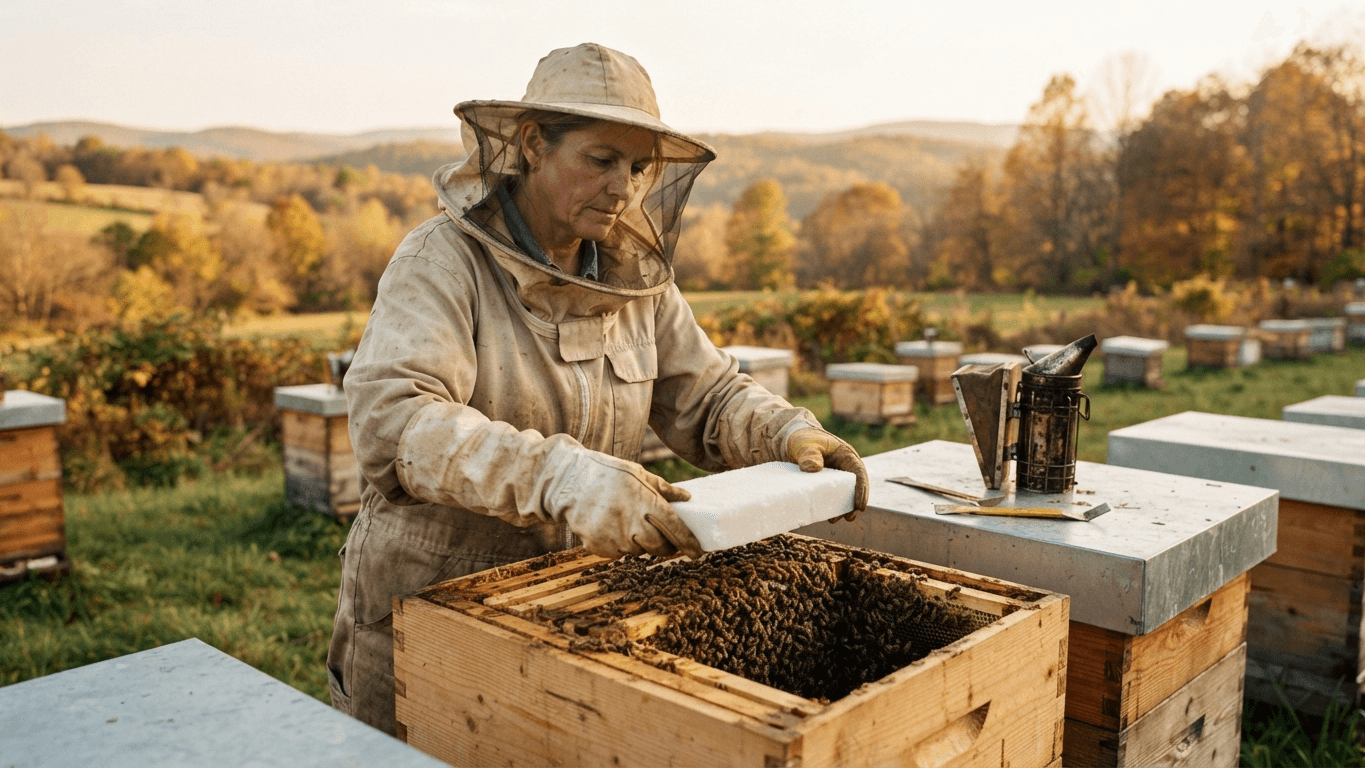
What Do Bees Eat in Winter?
In winter, bees eat the honey they stored during the season — that's their natural and ideal food. A healthy colony clusters around its stores and works through them slowly as it shivers to stay warm. You feed only when those stores are too low to last until spring. When you do feed, the options are, in order of when they're useful:
- Capped honey (their own, or frames saved from a strong hive) — the best food, full stop.
- 2:1 sugar syrup (heavy syrup) — in fall, before it gets cold, to let them top up and cure stores.
- Fondant or sugar bricks / candy — in deep winter, when it's too cold for syrup.
- Dry granulated sugar (the "mountain camp" method) — an emergency winter option that also absorbs moisture.
The golden rule: the colony's own honey is always best, and winter feeding is a rescue, not a routine. If you're feeding heavily every winter, the real fix is leaving them more honey in fall.
When to Feed (Timing Is Everything)
Most winter losses are really fall mistakes. The feeding calendar matters more than the recipe:
| Season | What to feed | Why |
|---|---|---|
| Early fall | 2:1 (heavy) sugar syrup | Bees can still take liquid and cure it into stores; build the larder before cold |
| Late fall | Finish syrup before consistent ~50°F/10°C nights | Below that, bees stop taking syrup and it can ferment |
| Winter | Fondant, sugar bricks, or dry sugar | Too cold for liquid; solid food sits right above the cluster |
| Late winter / early spring | 1:1 syrup once warm | Stimulates brood rearing as the colony ramps up |
The hard cutoff: once nighttime temperatures sit around 50°F (10°C) or below, stop feeding syrup. Cold bees can't evaporate the water, it ferments or chills the cluster, and it does more harm than good. Switch to solid food.
How Much Do They Need?
A colony needs enough stores to survive months with zero forage. As a rule of thumb:
Log Every Feed and Fall Weight
Track stores, feed dates, and hive weight so you catch a light colony before it starves.
- Cold climates (northern US, Canada, northern Europe): 60–90 lb (27–40 kg) of stores going into winter.
- Mild climates: 30–50 lb (14–23 kg) may be enough.
You don't weigh the honey directly — you heft the hive (lift the back an inch and judge the weight) or, far more precisely, read a hive scale. A hive that feels light in midwinter is the emergency that solid feeding exists to solve. This is exactly why winter colonies die: not from cold, but from running out of food before spring — the full picture is in do beehives die in winter.
Sugar Syrup Ratios, Decoded
Two ratios cover almost everything, and the difference is when you use them:
- 2:1 (two parts sugar to one part water, by weight) — fall. Thick, high-calorie, easy for bees to cure into winter stores. This is the fall build-up syrup.
- 1:1 (equal parts) — spring. Thinner, mimics a nectar flow, and stimulates the queen to lay. This is not a winter food — it's a spring brood-up food.
Mixing by weight beats eyeballing it. If you want the exact water amount and finished yield for a given amount of sugar, our sugar syrup calculator does the math for 1:1, 2:1, and thin medication syrup.
Solid Winter Foods: Fondant, Sugar Bricks & Dry Sugar
When it's too cold for syrup, the food has to be solid and sit directly above the cluster so the bees can reach it without breaking cluster:
- Fondant / candy boards — soft sugar slabs placed on the top bars or in a shim. Clean, easy, and the bees take it readily.
- Sugar bricks — hardened sugar-and-water cakes you can make yourself; cheaper than fondant.
- Dry granulated sugar (mountain camp) — pour sugar on newspaper over the top bars. Doubles as a moisture absorber, which is a bonus because winter damp kills colonies too.
Place solid food where the cluster can reach it without traveling — a cluster won't cross a cold gap of empty comb to find food, which is how hives starve with honey still in the box.
How to Feed Bees Through Winter
- Feed 2:1 syrup in early fall until the colony hits its target weight, finishing before nights drop to ~50°F/10°C.
- Heft or weigh the hive in late fall to confirm 60–90 lb of stores (cold climates).
- Switch to solid food (fondant, sugar bricks, or dry sugar) once it's too cold for syrup, placing it directly over the cluster.
- Check weight on warm days through winter without fully opening the hive; add fondant if it feels light.
- Switch to 1:1 syrup in early spring to stimulate brood rearing as the colony builds up.
Common Winter-Feeding Mistakes
- Feeding syrup too late. Cold bees can't cure it; it ferments. Switch to solids.
- Not feeding when it's actually needed. A light hive in January will starve — checking once a month on warm days catches it.
- Food in the wrong place. Solid food must be right above the cluster, not at the far end of the box.
- Over-relying on feeding. The real fix for a hive that needs heavy winter feeding is leaving more honey in fall — start with strong fall stores and a healthy, low-Varroa colony.
The Bottom Line
Winter bee feeding is simple once the timing is clear: their own honey is best, 2:1 syrup tops up stores in fall, and solid food (fondant, sugar bricks, dry sugar) carries a light colony through the cold. Feed on the calendar and on the hive's weight — not on a fixed schedule — and the colony that goes into winter heavy and healthy usually won't need rescuing at all.
Get the printable PDF version of this guide.
Field-ready pages you can print and take to the yard. One email, then it lands in your inbox.
More from the blog
View allSeptember Beekeeping Checklist 2026: Winter Prep Starts Now
The September beekeeping checklist that decides winter survival: verify your varroa treatment with a 10–14 day wash, feed 2:1 syrup by weight, check stores, combine weak colonies, and fit mouse guards — with the three deadlines that make each one count.
Do Beehives Die in Winter? Why Colonies Are Lost
Do beehives die in winter? Yes — but rarely from the cold itself. Here is why winter colony losses really happen (Varroa, starvation, moisture) and how to prevent them.