Smart Beehives: The Latest Innovations in 2026
What actually makes a beehive "smart" in 2026 — the sensors, solar power, AI alerts, and apps behind modern hive monitoring, and which innovations are worth the money for a hobbyist.
What Makes a Beehive "Smart"
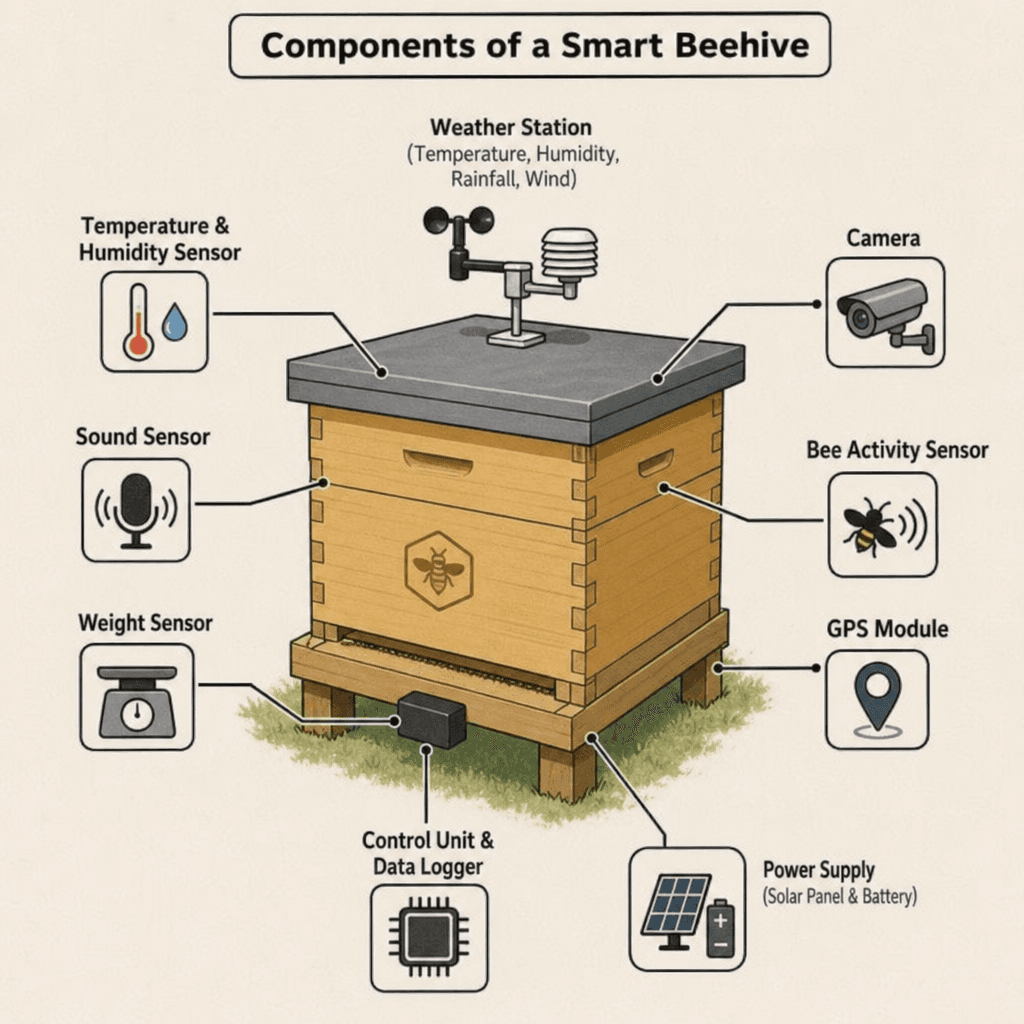
A smart beehive is an ordinary hive with sensors that report what's happening inside without you opening it. The core idea hasn't changed in a decade: a weight scale, a temperature probe, and a humidity sensor stream readings to your phone so you can see trends between inspections instead of guessing.
What has changed in 2026 is that the hardware got cheap and reliable, the batteries last a season on a small solar panel, and the software finally turns raw numbers into something a beekeeper can act on. Below is an honest tour of the real innovations — what each one does, what it costs you in money and hassle, and whether a hobbyist actually needs it.
The Sensor Stack, Decoded
Almost every "smart hive" on the market is some combination of the same handful of sensors. Here's what each one actually tells you.
Hive scale (weight)
The single most useful sensor, full stop. A continuous weight graph shows you the nectar flow starting (weight climbs through the day), the flow ending (the line flattens), a swarm leaving (a sudden 1–2 kg drop), and winter stores running low (a slow decline you'd otherwise miss until it's too late). If you buy one sensor, buy a scale.
Temperature and humidity
A brood-nest temperature probe reading a steady 34–35°C (93–95°F) tells you the colony is alive and raising brood — invaluable in winter when opening the hive would chill the cluster. A sudden drop can mean a queen failure or a dead-out. Humidity sensors flag condensation problems that drive disease.
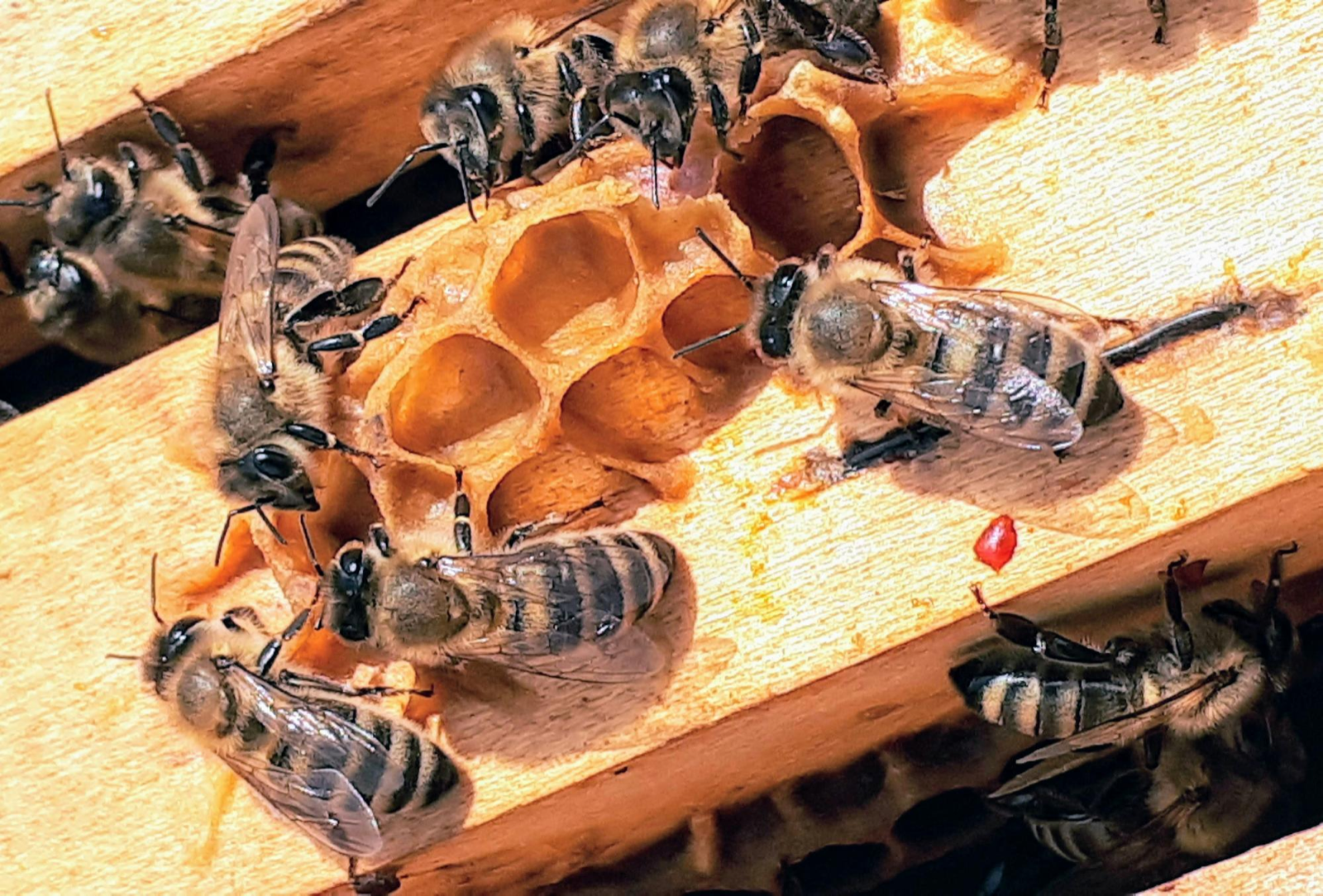
Photo by Boba Jaglicic on Unsplash.
Sound and bee-activity sensors
Newer and more experimental. Microphones listen for the "queenless roar" or the pre-swarm change in colony tone; entrance counters estimate forager traffic. These are genuinely interesting but still the least proven layer — treat their alerts as a prompt to go look, not as a diagnosis.
Cameras and GPS
Entrance cameras give you a visual check without a drive to the yard. GPS modules exist mostly for theft recovery — hive theft is a real problem for commercial outfits and migratory beekeepers.
Solar Power and Connectivity
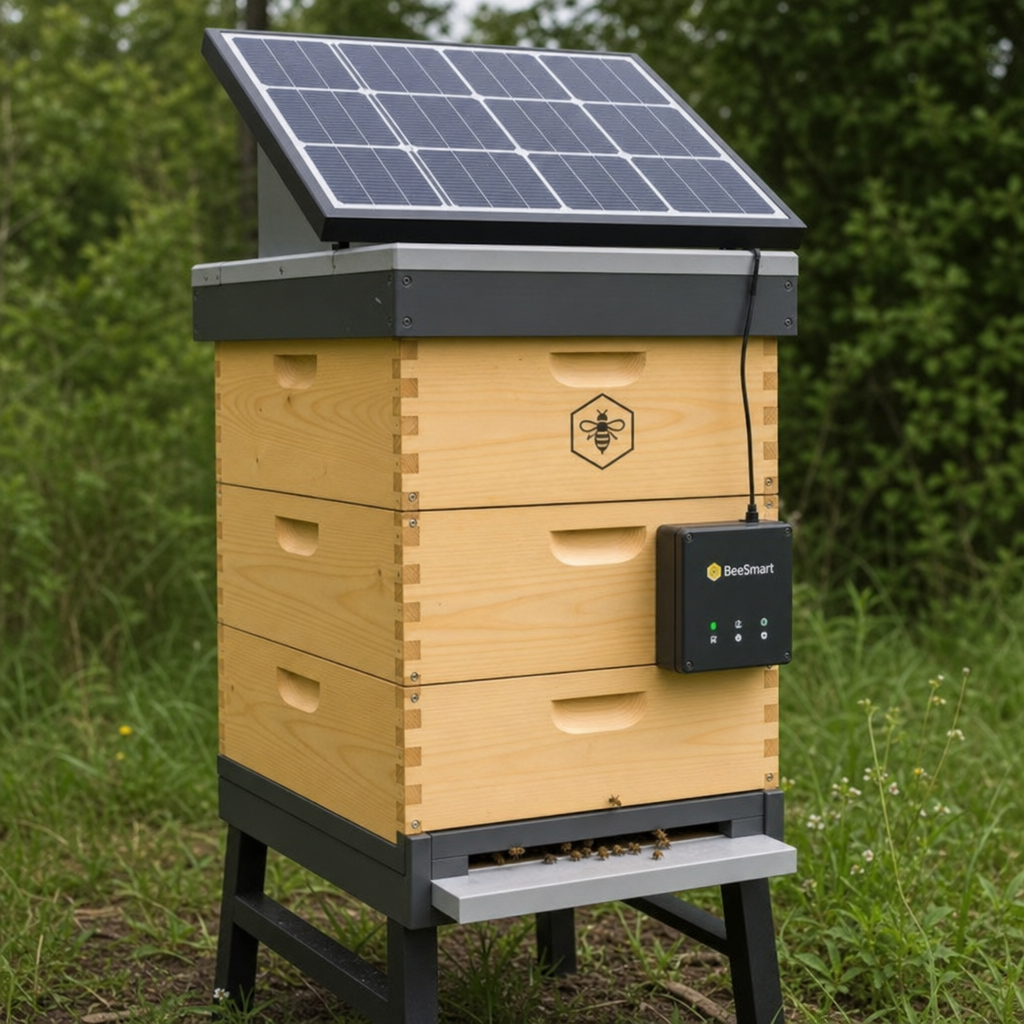
The quiet innovation that made all the above practical is power and connectivity in the field. Modern monitors run for months on a small solar panel and a rechargeable cell, so you're not swapping batteries in January. For data, units use Bluetooth (you collect readings when you visit the yard), or a cellular/LoRa gateway (readings arrive at home in near real time). Bluetooth is cheaper and fine for a backyard; a gateway earns its keep for out-yards you visit rarely. If you're choosing a full system, our virtual bee platform buyer's guide breaks the WiFi vs cellular vs LoRaWAN decision down by field conditions.
This matters more than the spec sheet suggests: the best sensor is worthless if its data never reaches you. If your bees live where cell coverage dies, an offline-first logging app that captures readings on-device and syncs later is what keeps the system honest.
AI and Alerts: Signal vs. Hype
"AI-powered" is the most over-claimed phrase in beekeeping tech. Here's the honest version.
Turn Any Hive Into a Smart Hive
Read BroodMinder and other Bluetooth sensors straight into your inspection timeline — no new hardware ecosystem to learn.
What works today: threshold and pattern alerts. The software learns your hive's normal weight rhythm and pings you when something breaks the pattern — a swarm-sized weight drop, a brood-temperature collapse, a flow that stopped a week early. That's not magic; it's good anomaly detection, and it genuinely catches problems days before a routine inspection would.
What's still maturing: predictive diagnosis. Claims that an app will tell you "your queen is failing" or "treat for mites now" from sensor data alone are ahead of the evidence. The sensors narrow where to look; your eyes on the frame still make the call. Anyone selling sensor data as a replacement for inspections is overselling.
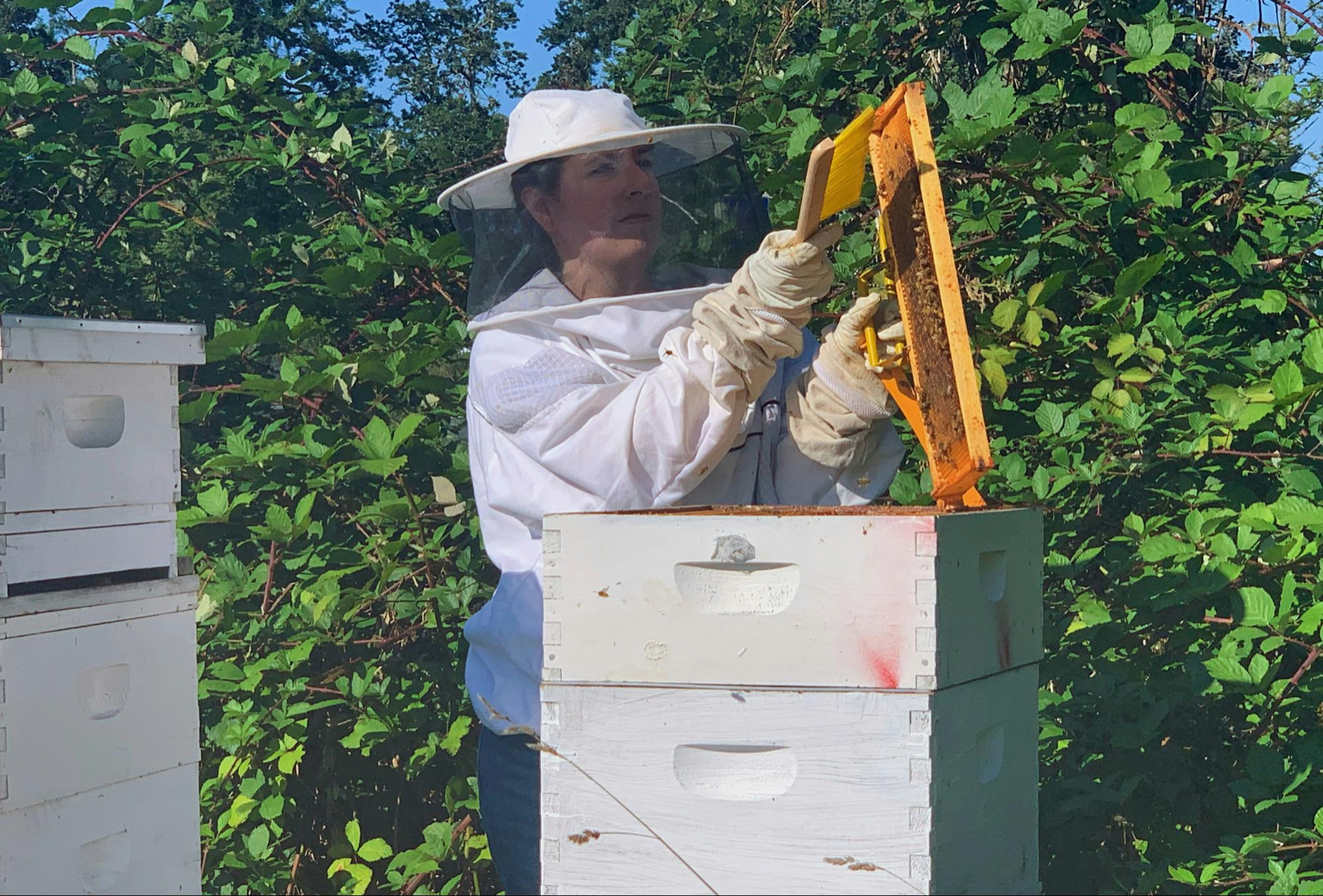
Photo by Melissa Askew on Unsplash. For the deeper take on this, see our honest test of whether a smart hive app is a real upgrade or a lateral move.
The other 2026 development worth knowing about isn't a sensor at all — it's biology. Licensed honey bee vaccines for American foulbrood are now a real tool, and "smart" beekeeping increasingly means pairing hardware monitoring with these medical advances rather than choosing one over the other.
What It Costs — and What's Worth It
A rough 2026 picture for a hobbyist. Prices vary by region and brand; treat these as orders of magnitude.
| Innovation | Rough cost | Worth it for a hobbyist? |
|---|---|---|
| Bluetooth hive scale | $130–250 | Yes — highest value per dollar |
| Temperature + humidity sensor | $40–90 | Yes, especially for winter monitoring |
| Solar + cellular gateway | $150–400 | Only for out-yards you rarely visit |
| Sound / bee-activity sensor | $80–200 | Optional — interesting, still unproven |
| Entrance camera | $60–200 | Nice-to-have, not essential |
| GPS theft tracker | $50–150 | Only if theft is a real risk for you |
The pattern: a scale plus a temp/humidity sensor covers 90% of the value for under $300. Everything above that is refinement, not foundation. You do not need the whole stack to run a smart hive.
You Don't Have to Buy a Whole New Hive
The biggest misconception is that "smart beehive" means buying a proprietary, all-in-one hive that locks you into one vendor's ecosystem. It doesn't. The more durable approach is to add open, off-the-shelf sensors to the hives you already run, and read them all into one place.
That's the gap most setups have: the scale lives in one vendor app, the temperature sensor in another, and your inspection notes in a notebook — three islands that never talk. The actual innovation worth chasing is unification: putting sensor readings on the same timeline as your written observations so "weight dropped 1.5 kg this week" sits right next to "saw queen cells on frame 6." That correlation is the thing paper and single-purpose apps can't give you. See how we approach unifying hive sensors across brands, and the BroodMinder setup walkthrough for the most common starting sensor.
How to Build a Smart Hive on a Budget
You don't need to do this all at once. A sensible, staged path:
- Start with records, not hardware. Log a few inspections in a hive management app first. The data structure you build now is what every sensor reading will hang off later.
- Add a hive scale. It's the highest-value sensor. Mount it under one strong hive and watch a season of weight data — you'll learn your local flow timing fast.
- Add temperature and humidity. Cheap, and they unlock safe winter monitoring without cracking the lid in the cold.
- Unify the data. Read the sensors into the same app as your inspection notes so readings and observations share one timeline. This is where the value compounds.
- Only then consider gateways, sound, or cameras. Add the advanced layer when a specific need shows up — a hard-to-reach out-yard, a swarm-prone colony, a theft worry — not before.
When a Smart Hive Isn't Worth It
Honesty matters here. If you have one or two hives in your backyard, you visit them weekly, and inspections aren't a chore, sensors are a nice toy but not a need — your eyes already collect most of the signal. Smart hardware pays off when distance, scale, or season put a wall between you and the hive: out-yards an hour away, a dozen-plus colonies, or winter months when opening up does more harm than a sensor would catch. Buy for the problem you actually have, not the dashboard you'd enjoy looking at.
On the Horizon: Drones, Robotics & Deeper AI
A few innovations get a lot of headlines but aren't yet practical for most hobbyists — worth knowing about, worth being skeptical of.
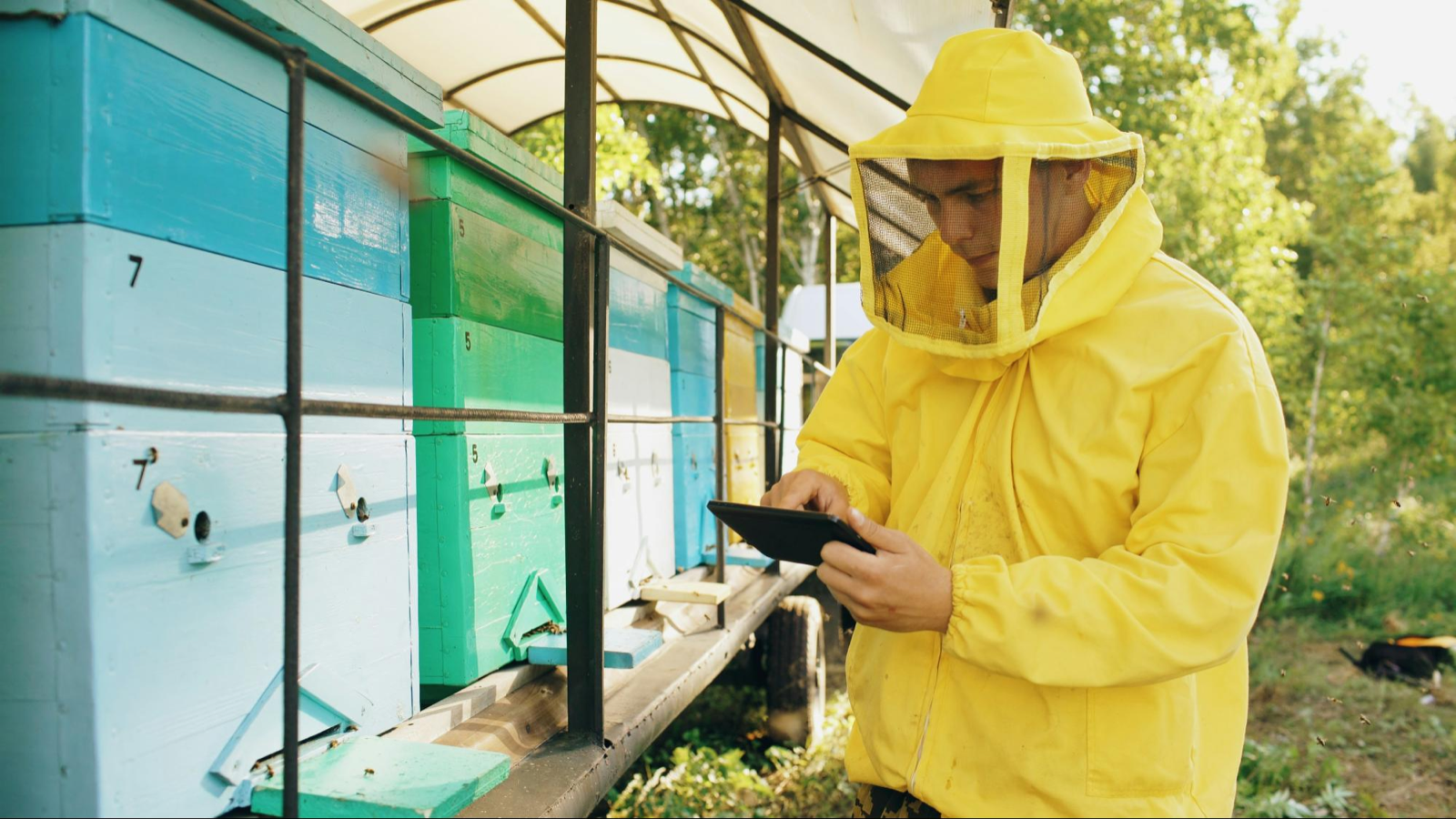
- Drones and aerial inspection. Camera- and sensor-equipped drones can survey large or hard-to-reach apiaries from above and flag obvious problems without a walk-through. Genuinely useful at commercial scale; overkill for a backyard.
- Robotics and automated handling. Robotic systems that sort and package honey — and experimental rigs that inspect frames — are real in large operations, where consistency and labor savings justify the cost. Not a hobbyist tool yet.
- Machine-learning prediction. This is the frontier worth watching: models trained on sensor histories that forecast swarming or flag early disease signatures. It's promising and improving, but treat any current "it predicts queen failure" claim as a prompt to inspect, not a diagnosis. The data narrows where to look; it doesn't replace your eyes.
The honest read on all three: they're maturing, not mainstream, and none of them changes the starter advice above. A scale, a temp/humidity sensor, and your own eyes on the frames still cover the vast majority of the value.
The Bottom Line
The "latest innovations in smart beehives" in 2026 are less about any single gadget and more about three things maturing at once: sensors got cheap and solar-reliable, alert software got good at flagging real anomalies, and apps finally started putting sensor data and inspection notes on one timeline. Start with a scale, add temperature and humidity, keep your own eyes on the frames, and unify everything in one place. That's a smart hive — no proprietary box required.
Turn Any Hive Into a Smart Hive
Read BroodMinder and other Bluetooth sensors straight into your inspection timeline — no new hardware ecosystem to learn.
Free for up to 15 hives. No credit card required.
Use HiveSense for this
More from the blog
View allThe Future of Beekeeping: What the Next 20 Years Look Like
An honest look at where beekeeping is heading — sensored hives and AI alerts, vertical and urban apiaries, bee vaccines and RNA mite control, and climate-driven management — with a clear-eyed take on what is real now versus hype.
How to Choose a Virtual Bee Platform (2026 Buyer’s Guide)
A practical buyer’s guide to choosing a virtual bee platform in 2026 — what to weigh on remote monitoring, weight tracking, WiFi vs cellular vs LoRaWAN gateways, and software that doesn’t need a tech degree.